Lifestyle store with a curated edit of designers and artisans based in Toronto, Canada.
Alexa Kumiko Hatanaka is a Japanese-Canadian queer artist living with bipolar condition. Working primarily with paper, printmaking, natural dyes, ink and sewn forms, she draws on traditional craft to explore ecological instability, mental health and human resilience.
Britt Liberg is a multidisciplinary artist with a background in ballet and fashion whose practice spans dance, performance, video and fashion. Her work considers the body as fluid and explores the ways clothing can shape identity and our understanding of the female form. Her ongoing series SKIRTS celebrates the diversity of women through one-of-a-kind and small-edition skirts made from carefully selected deadstock fabrics.
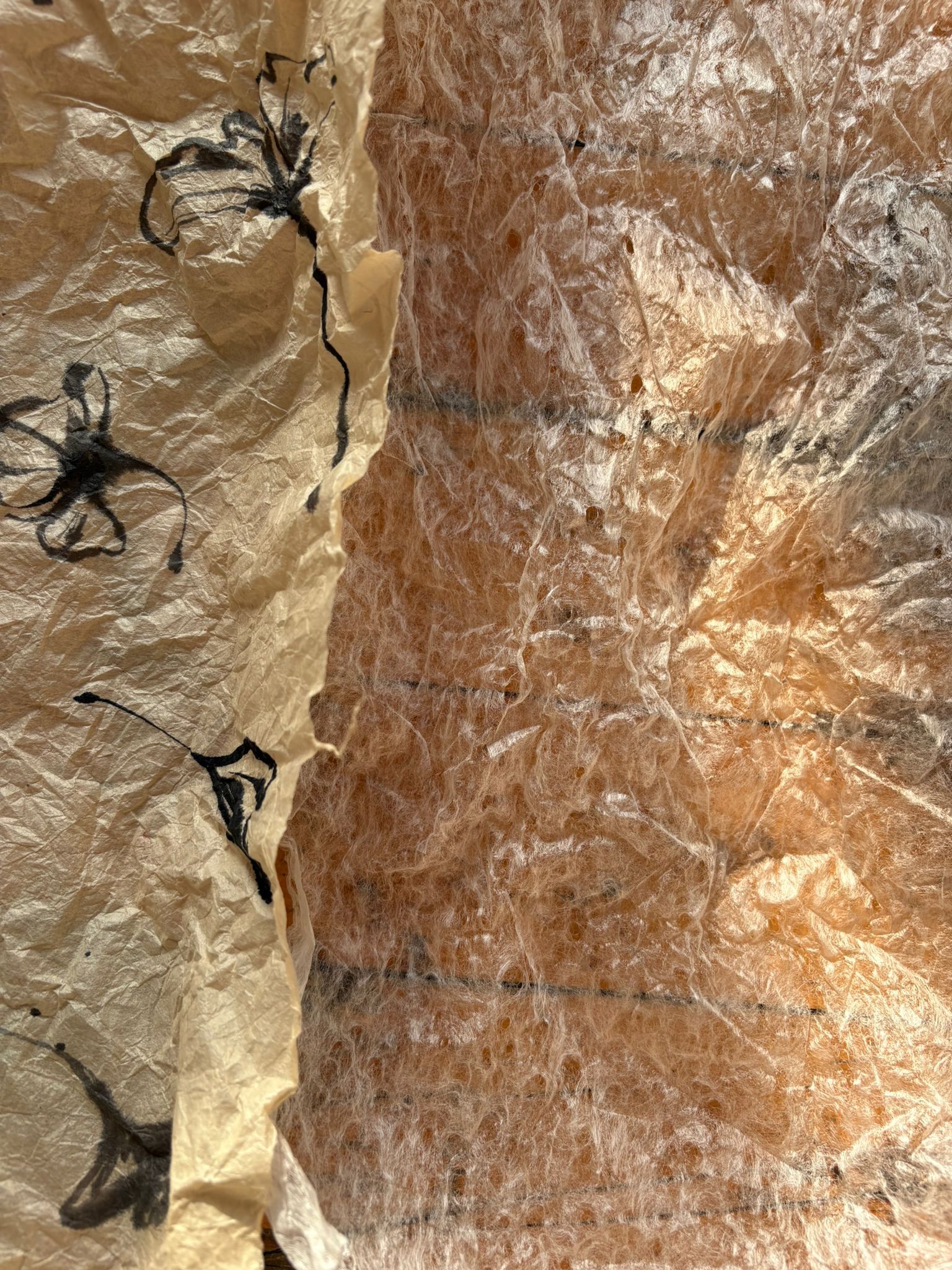
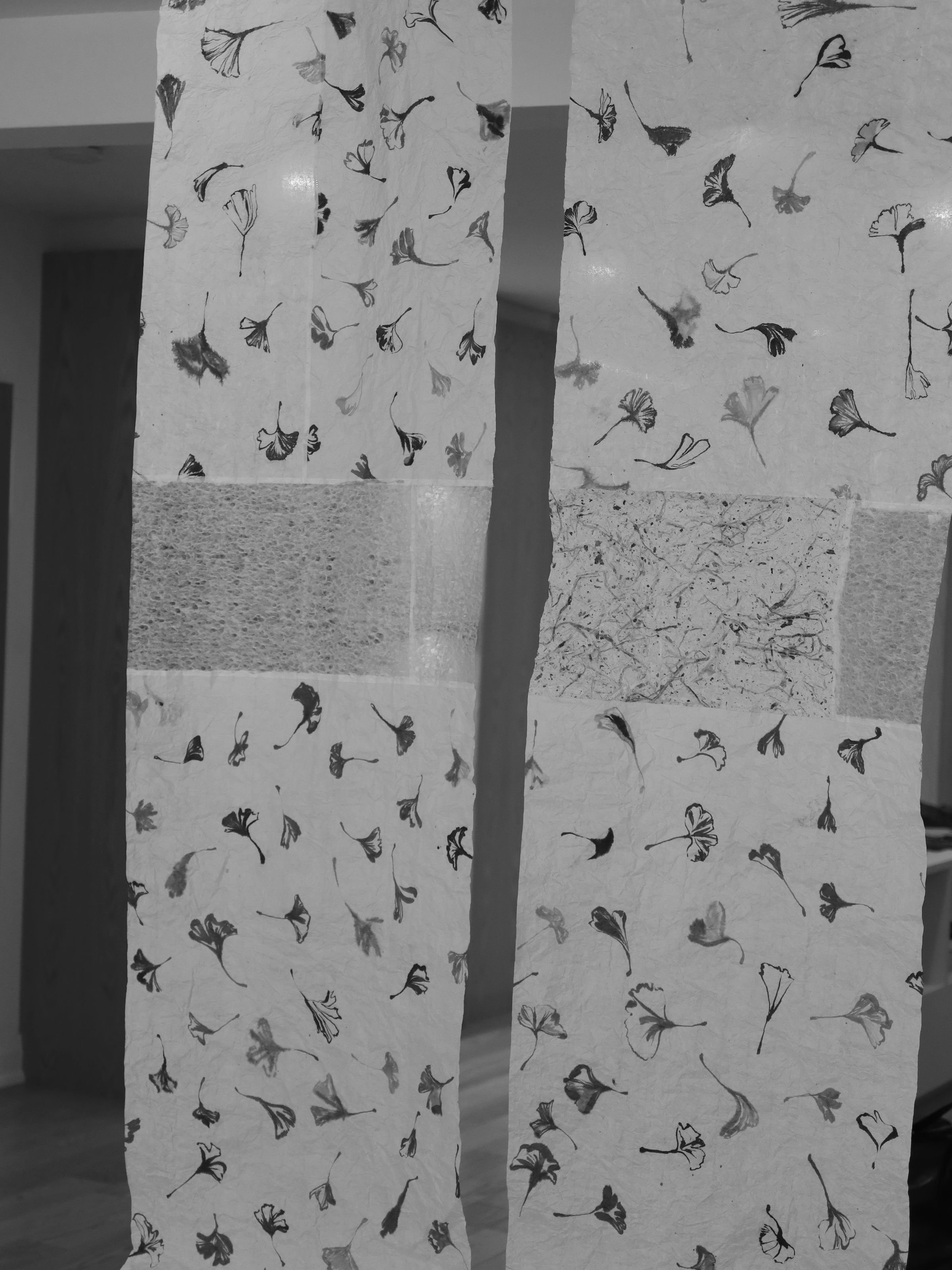
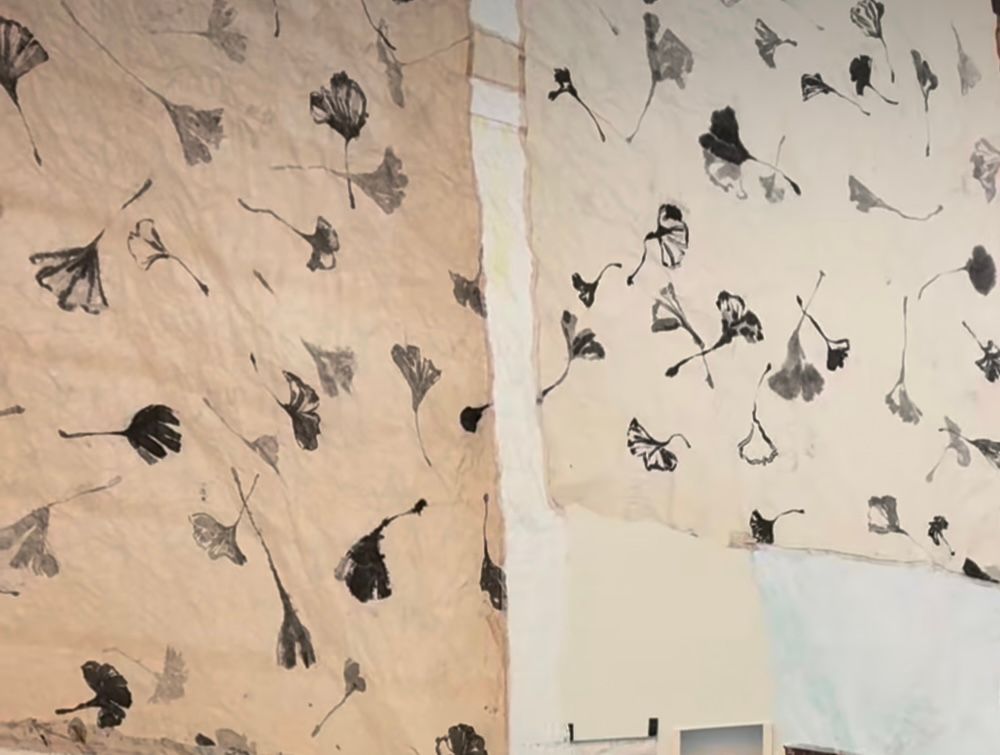
Their collaboration began with Alexa’s ink drawings of ginkgo leaves. While researching the evolution of bipolar condition, Hatanaka encountered the theory that it may have emerged in part as an adaptive response to the extreme climatic shifts of the Pleistocene. Ginkgo trees survived that period too. The motif connects our ecosystem to the personal: we are not separate from nature. In our own period of ecological instability, Alexa’s work looks toward neurodivergent experience and traditional craft as sources of knowledge about adaptation, attention and care.
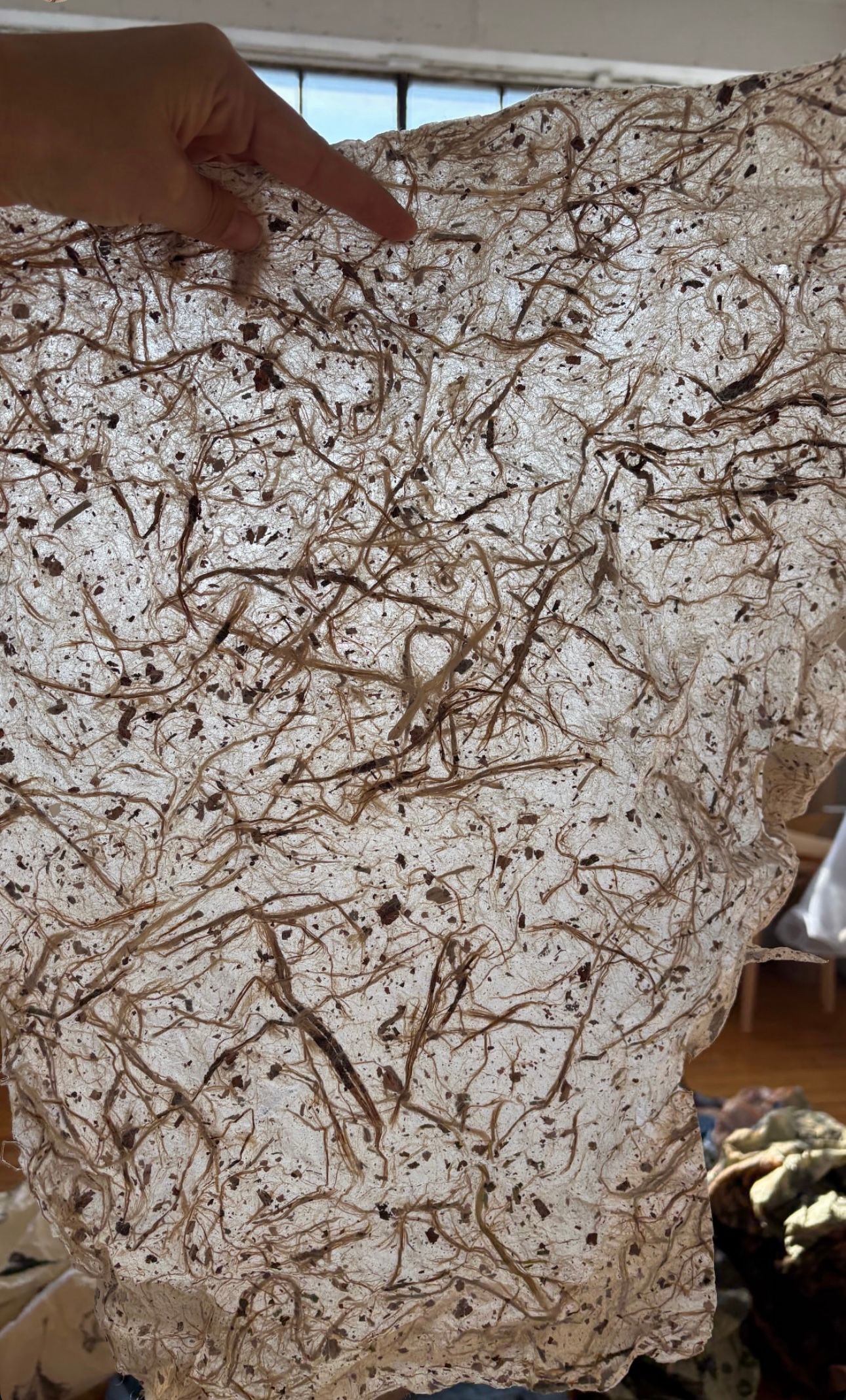
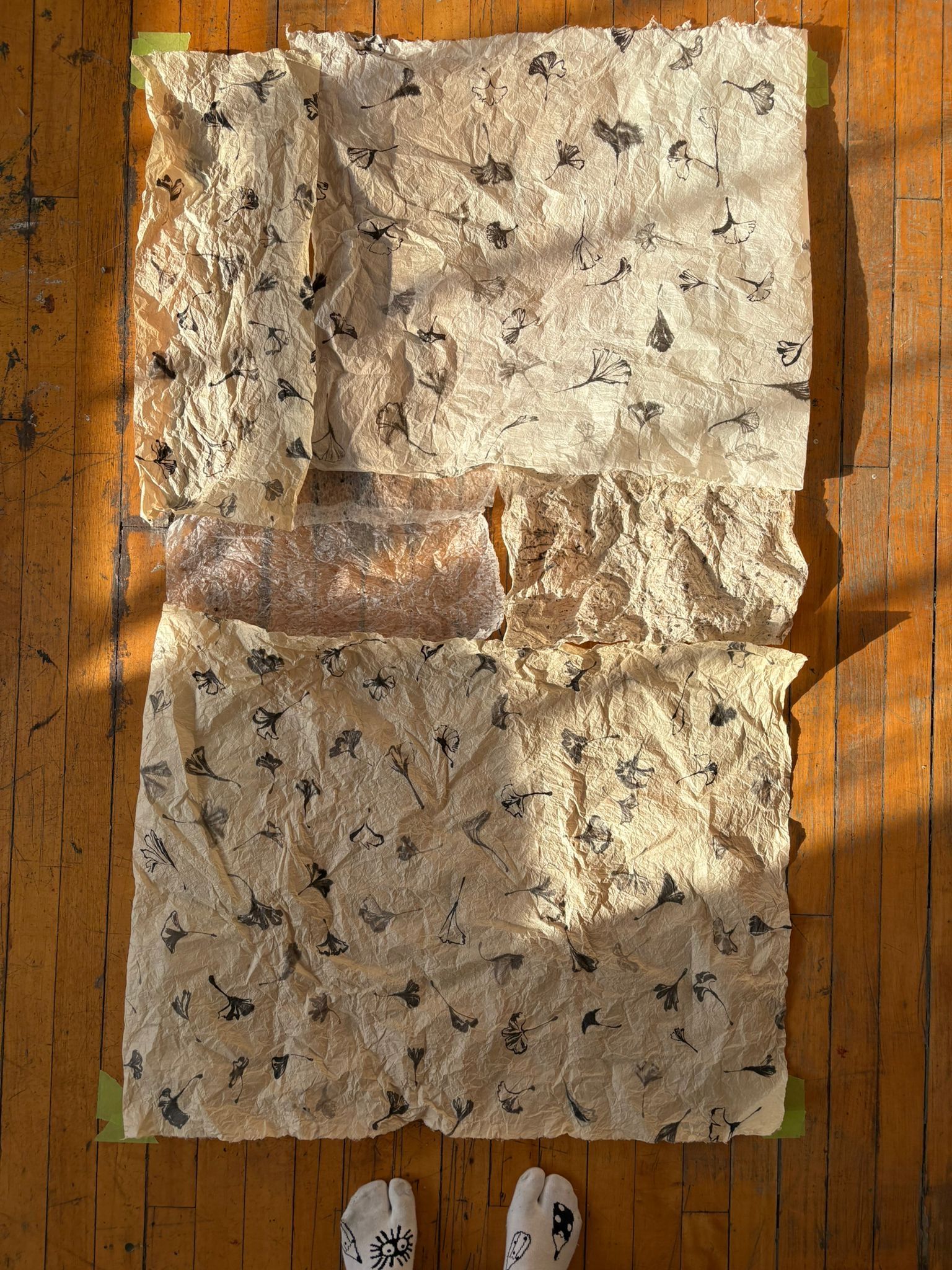
The ink drawings were the basis of the artwork that hangs in our store, Aki (2026), which is the Japanese word for Autumn, as well as Alexa’s great-grandmother’s name. Alexa made some of this paper while in residence at Kashiki Seishi, a seventh-generation family mill in Kochi, Japan, under the guidance of master washi maker Tatsuyuki Kitaoka. Some sheets were made in the studio; the most highly textured were formed directly in the Niyodo River. Other papers were made by Kashiki Seishi, including sheets that are generations old. Traditional washi is inseparable from the ecology that produces it: kozo, pure water, community knowledge and the careful stewardship of land. The paper is strengthened with konnyaku starch, giving it a flexibility that brings it closer to textile. Delicate in appearance yet capable of lasting for centuries, it holds tension between transience and endurance.
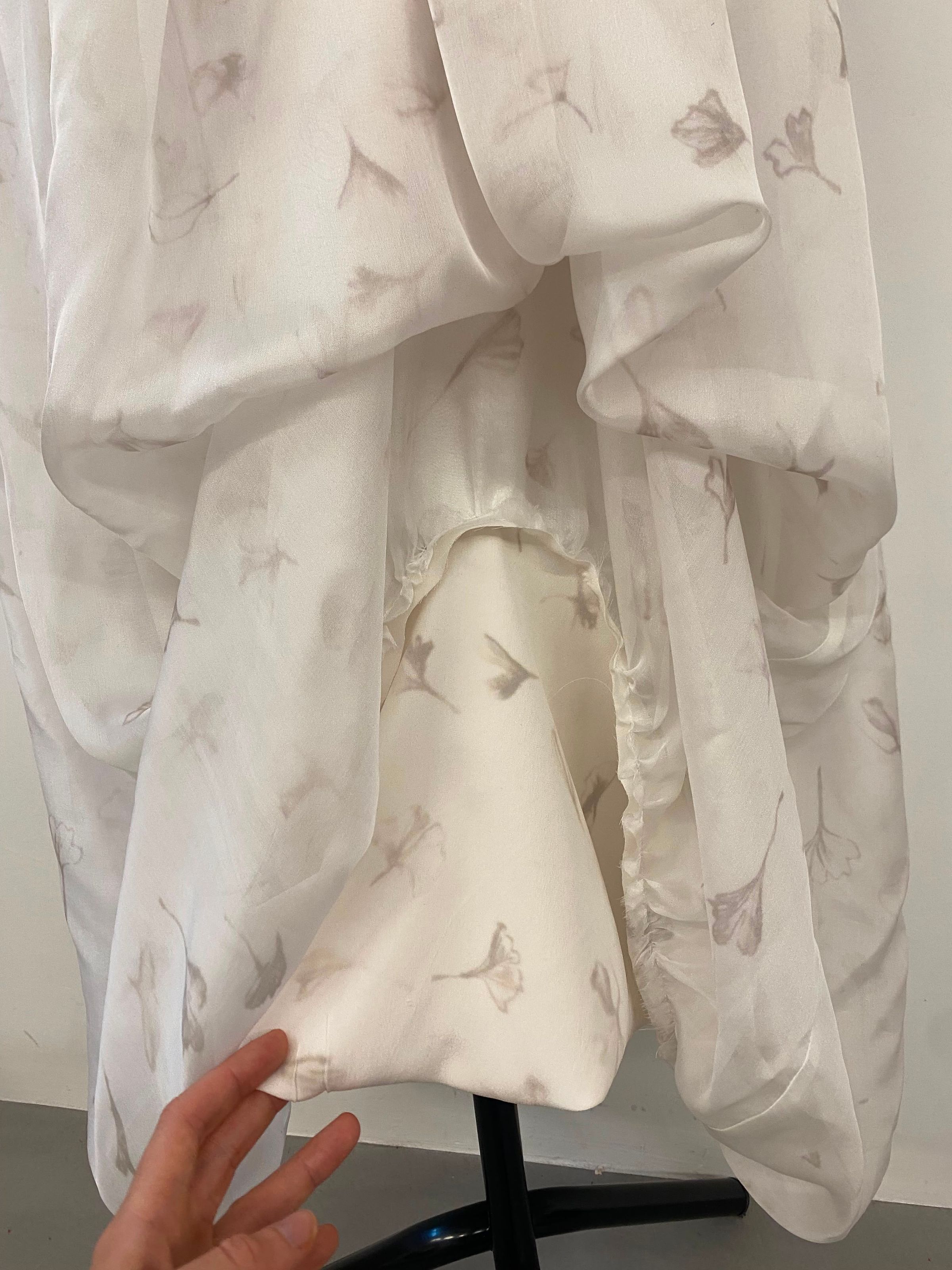
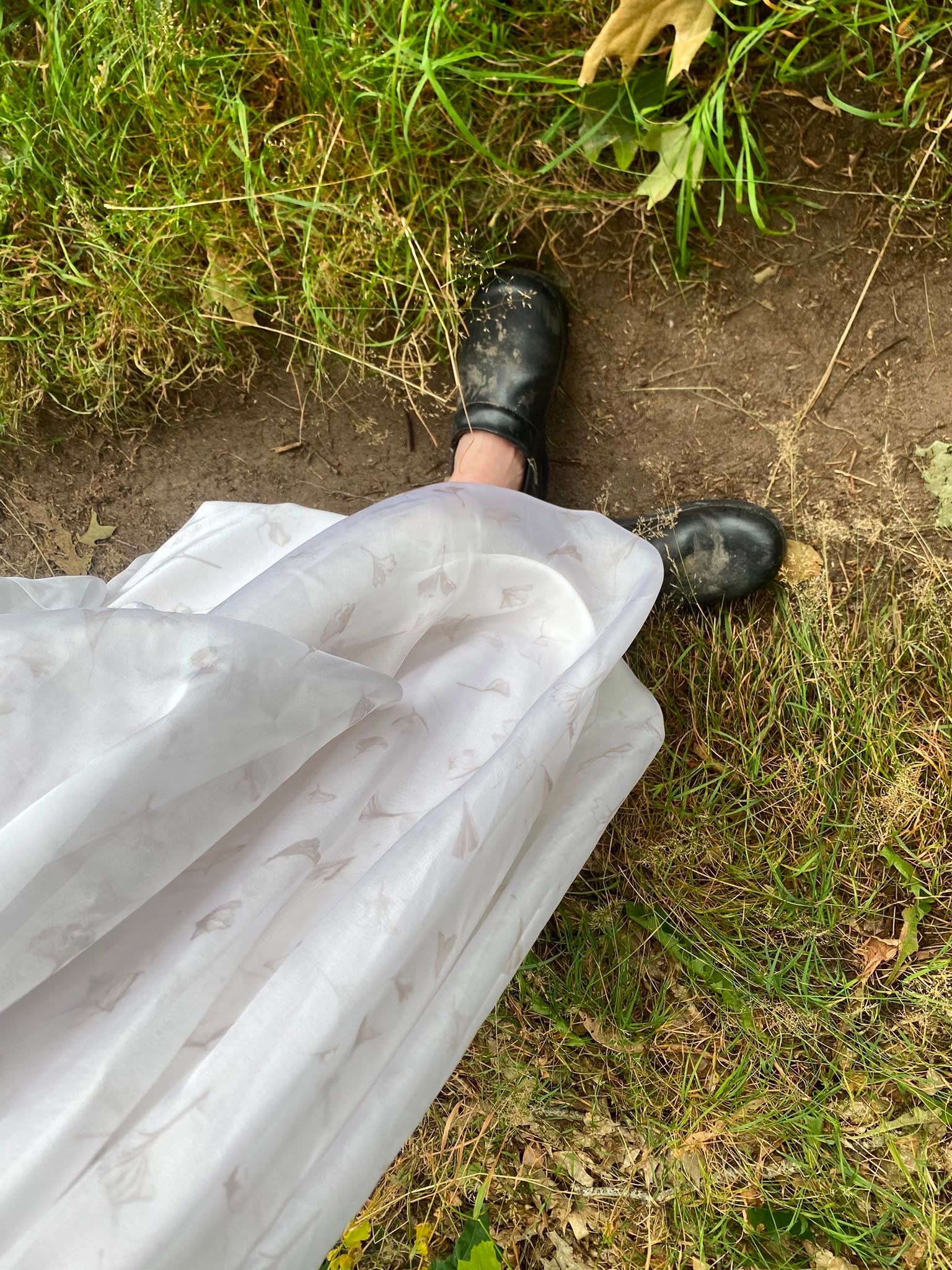
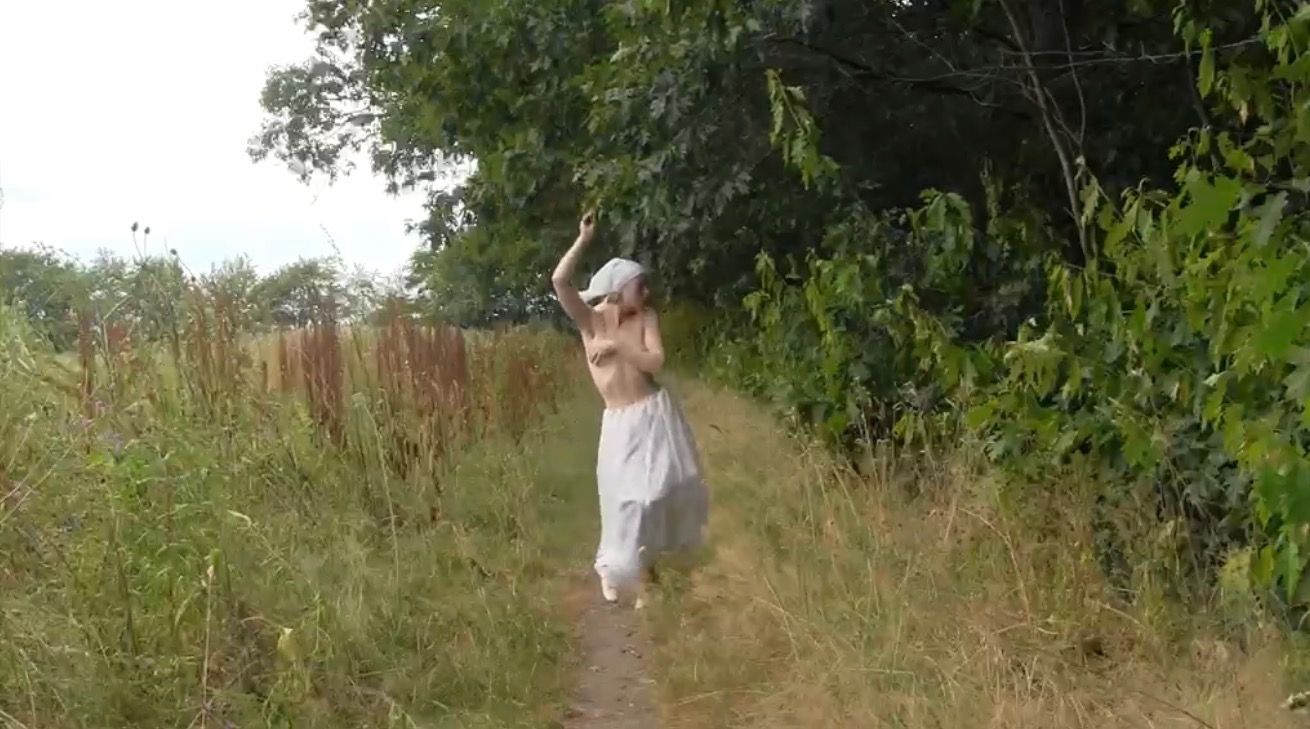
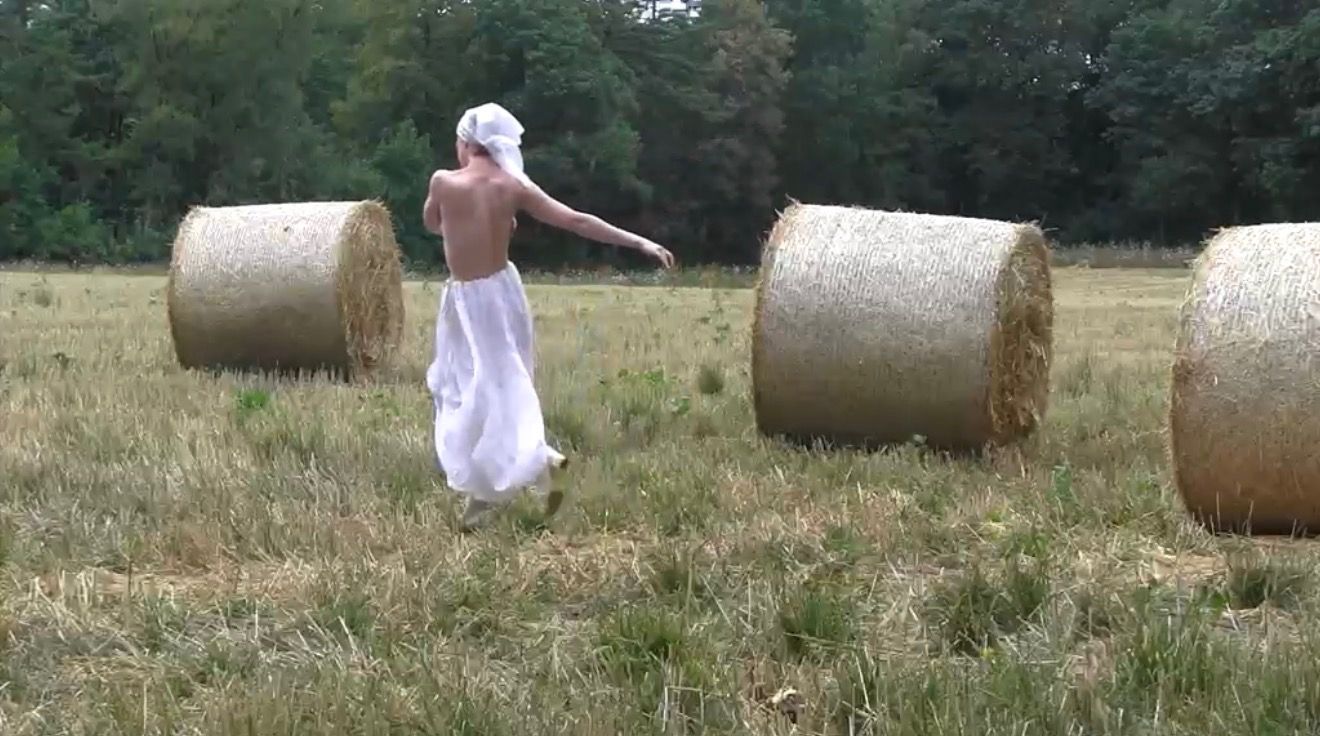
Alexa transformed her drawings into a pattern printed on silk, which Britt made into a skirt called Alexa. Britt has since performed in the Alexa skirt in different settings - and in each place, the work changes through its relationship with her body and its surroundings. Across paper, silk, drawing and performance, the collaboration considers resilience as the capacity to adapt, transform and continue.
What is your favourite street to cross?
Britt De Kerkstraat in Amsterdam. It’s a very green, quiet street in the middle of Amsterdam with lots of history. I just love walking through and looking at the lives of people living there for ages.
Alexa I don’t really like crossing streets. What comes to mind is that I love zooming over the bridges between Brooklyn and New York City on an ebike. My favourite is the Williamsburg Bridge. I have so many rich memories associated with biking over that bridge. The exhilaration and sense of freedom never fails to wash over me as I’m flying through space and taking a peek at the water over my shoulder.
What is something worth taking your time with?
Britt The finishing of my skirts. It’s mostly done by hand and takes lots of time, but I love doing it and I think it gives every skirt its own character.
Alexa Process. Of any kind. I am tired of it being taken for granted that we need to “optimize” everything we do. The virtue of most beautiful things is that it takes time to master a craft or skill, it takes time to make, and it takes time to nurture the related relationships. Process is generative. Ideas come in the making, the making of “mistakes,” the varying states and emotions one is embodying when making at a given time. I want to be careful not to romanticize the actual hard labour that goes into a lot of making. One example that I am close to and have lived experience with is the creation of washi, Japanese traditional paper. It isn’t pretty harvesting kozo all day with cold feet and carrying bundles on one's shoulder, nor the repetitive labour of peeling off the bark. However, it wouldn’t be what it is without the community collaboration, slowness and care in every step. In another personal example, in the art world we are increasingly expected to be everywhere all at once, and because of the high cost of living, studios and materials, as well as the pressure to be constantly busy, an artist's career growth often requires delegation and hiring out parts of the process. In some cases there is no reason for an artist to do certain aspects of labour, but I see a lot of artists farming out important parts that used to be done by oneself and, as such, I think the work loses its original essence. I think the requirement for efficiency threatens the soul of the artwork, and it threatens the evolution of ideas that can only happen when one is directly engaged in the process.
Where do you feel most at home?
Britt I have a built-in camperbox in my car. Wherever I take it, I feel at home. As long as my partner and my dog, Billie, are with me.
Alexa For me, because I travel so much and have cherished relationships all over, my sense of home is rooted in the company of those I feel close to. In terms of a place, I most enjoy embodying the person I am when I am in New York. In terms of visual and craft-based inspiration, I feel most inspired when I am in Japan, and the stimulation of my curiosity and hunger to discover allows me to feel at home in my body.
What is your favourite daily ritual?
Britt My morning routine! Drinking coffee in bed and reading a book. If reading is the first thing I do, my concentration is much better during the rest of the day. I do this almost every morning.
Alexa I am not always consistent with it, but I enjoy journaling in bed before I go to sleep. It allows me to get floating thoughts out of my head, and I always make space for notes of gratitude. I find it reorientates my brain to what is going well, whereas sometimes throughout the day my brain is more focused on things I need to be proactive about or that I am concerned about.
When do you feel most restored?
Britt Being in the water, or even looking at water, makes me feel calm. Water has a healing power to me. Everywhere I go, I always try to find a lake or a river or even a little pond. I love the sea the most.
Alexa I feel most restored in a natural setting where I am made to feel small—in a vast mountain valley or by the ocean. I also feel restored after the onsen in Japan, especially the outdoor ones; a hot and cold cycle and sitting silently with multiple generations of women.
Can you name an object you couldn't imagine living without?
Britt My silver ink pen. I bring it everywhere, so I can write letters to my friends wherever I go. Yes, I still write lots of letters. There is something special about writing on paper and sending these words into the world. Also, I’m a bit superstitious, so if I don’t have my pen, I always feel something bad is going to happen.
Alexa I have all of these historical documents that my grandmother passed on to me. In Japan, I bought this soft sculpture of a Buddha based on the stone Buddhas found in graveyards. It’s about 5 by 12 by 4 inches. It’s brought me great comfort. It makes me wonder why we do away with stuffies as adults.
What is one tradition or habit you hope to pass on?
Britt: My love and appreciation for historical garments. Me and my friends collect pieces and wear them as costumes, but also in our daily lives. I hope the appreciation for craft and the care that is put in these garments is something that will be passed on forever.
Alexa I hope to pass on a care and appreciation for traditions.
What do you love?
Britt Performing. Being in front of an audience is what I love most! And chocolate cookies. And having dinner with friends. And staring at my dog while she’s sleeping.
Alexa I love art that is sincere and rooted in craft traditions; the hand and heart of the maker is palpable in the physical object. I love eating meals in Japan where every little item has its own intentionally chosen dish. I love dim sum. I love discovering a dish or flavour I haven’t experienced before. I love handmade textiles. I love textiles that denote rites of passage, or support ritual. I love making memories with my family and friends. I love moss. I love fashion that acts as a conversation starter and makes me feel stoked to enter an event or dance.